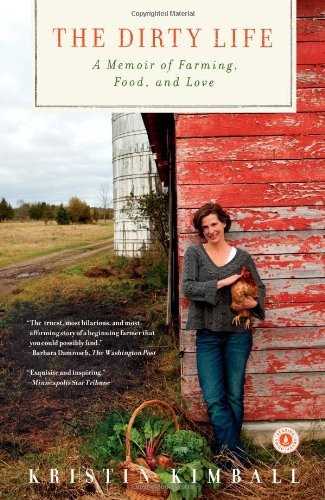
The Dirty Life: A Memoir of Farming, Food, and Love by Kristin Kimball
Notes about this book
You must Create an Account or Sign In to add a note to this book.Reviews about this book
- ISBN 10 1416551611
- ISBN 13 9781416551614
- Published Apr 12 2011
- Format Paperback
- Page Count 304
- Language English
- Edition Reprint
- Publisher Scribner
Publishers Text
"This book is the story of the two love affairs that interrupted the trajectory of my life: one with farming—that dirty, concupiscent art—and the other with a complicated and exasperating farmer."Single, thirtysomething, working as a writer in New York City, Kristin Kimball was living life as an adventure. But she was beginning to feel a sense of longing for a family and for home. When she interviewed a dynamic young farmer, her world changed. Kristin knew nothing about growing vegetables, let alone raising pigs and cattle and driving horses. But on an impulse, smitten, if not yet in love, she shed her city self and moved to five hundred acres near Lake Champlain to start a new farm with him. The Dirty Life is the captivating chronicle of their first year on Essex Farm, from the cold North Country winter through the following harvest season—complete with their wedding in the loft of the barn.
Kimball and her husband had a plan: to grow everything needed to feed a community. It was an ambitious idea, a bit romantic, and it worked. Every Friday evening, all year round, a hundred people travel to Essex Farm to pick up their weekly share of the "whole diet"—beef, pork, chicken, milk, eggs, maple syrup, grains, flours, dried beans, herbs, fruits, and forty different vegetables—produced by the farm. The work is done by draft horses instead of tractors, and the fertility comes from compost. Kimball’s vivid descriptions of landscape, food, cooking—and marriage—are irresistible.
"As much as you transform the land by farming," she writes, "farming transforms you." In her old life, Kimball would stay out until four a.m., wear heels, and carry a handbag. Now she wakes up at four, wears Carhartts, and carries a pocket knife. At Essex Farm, she discovers the wrenching pleasures of physical work, learns that good food is at the center of a good life, falls deeply in love, and finally finds the engagement and commitment she craved in the form of a man, a small town, and a beautiful piece of land