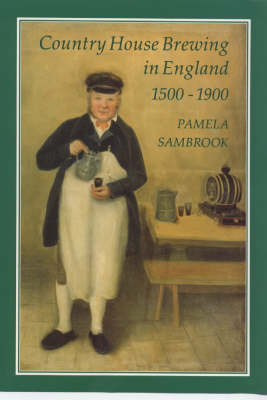
Country House Brewing in England, 1500-1900 by Pamela Sambrook

This book has not been indexed yet...

Notes about this book

This book does not currently have any notes.

You must Create an Account or Sign In to add a note to this book.

Reviews about this book

This book does not currently have any reviews.

  • ISBN 10 1852851279
  • ISBN 13 9781852851279
  • Published Jul 01 1996
  • Format Hardcover
  • Page Count 332
  • Language English
  • Countries United Kingdom
  • Publisher Continuum
  • Imprint Hambledon Continuum

Publishers Text

Until the 18th century or even later, beer was the staple drink of most men and women at all levels of society. Tea and coffee were expensive luxuries while water might well carry disease. To supply the needs of both owners and servants, every country house with an accessible source of water had a brewhouse, usually close at hand. Although many of the brewhouses still stand, in some cases with the original brewing vessels (as at Lacock and Charlecote), their habitual conversion to other uses has allowed them to be ignored. Yet they are distinctive buildings - as much part of a country house as an ice-house or stables - which need both to be recognized and preserved. The scale of brewing in country houses, which went on to a surprisingly late date in the 19th century (with odd survivals, such as Hickleton in Yorkshire, in the 20th), was often considerable, if small besides that of commercial brewing. Copious records for both brewing and consumption exist. Pamela Sambrook describes the brewing equipment, such as coppers, mash tuns, underbacks and coolers; the types of beers brewed, from strong ale to small beer, and how they were kept; and the brewers themselves, their skills and attitudes. "English Country House Brewing, 1500-1900" shows the role beer played in the life of the country house, with beer allowances and beer money an integral part of servants' rewards. Generous allowances were made for arduous tasks, such as harvesting. For celebrations, such as the heir's coming of age, extra-strong ale was provided. This book, which is heavily illustrated, is an important and original contribution to architectural, brewing and social history.

Other cookbooks by this author