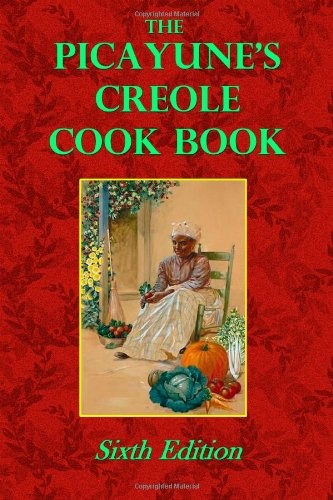
The Picayune's Creole Cook Book by The Picayune

    • Categories: Beverages / drinks (no-alcohol); Cajun & Creole; Vegan; Vegetarian
    • Ingredients: coffee
    show

Notes about this book

  • robm on July 08, 2023

    There is also an abridged and updated edition, annotated in the margins by a well-known modern authority on Creole cuisine, Marcelle Bienvenu. It was originally published in 1987 as the Sesquicentennial Edition. The annotations and updates are very helpful for modern cooks, especially explaining and clarifying older cooking terms and techniques, but if you are looking for the complete, unabridged version, you need to search for this edition (the one indexed here on EYB), available on Amazon and elsewhere.

  • cahunter925 on November 12, 2022

    Available full-text on CKBK paid website

  • robm on March 27, 2012

    In using this book, please be aware of some unique New Orleans usages or words that have changed meaning. Shallots in New Orleans are actually green onions (scallions). The old Creoles used the French word pistache both for pistachios and for peanuts. Sherbets are sorbets (water ices). Maunsell-White, as used in the book, is Tabasco sauce. (The Maunsell-White family sold their recipe for the hot pepper sauce to the company that now makes Tabasco.) Not to be confused with the Maunsell-White 1812 Wine Sauce, which is still sold in New Orleans. Also, there are a number of old spellings in the recipe titles, so please keep them in mind when you search for recipes. These include ognons, instead of oignons, and cocoanut instead of coconut. Also chevrettes instead of crevettes (shrimp). If you have trouble searching for one of the recipes, look under both the English and French names to improve the chances of finding it on EYB.

  • robm on March 27, 2012

    As a helpful companion to this volume, try to find the Sesquicentennial Edition. It doesn't include all the recipes of the original, but all the included recipes were tested in modern kitchens and suggestions for modern ingredient substitutions and modern measurements are included in marginal notes. It's out of print, but can be found used online. It’s also been republished as The Picayune’s Creole Cookbook, ISBN 9780394576527. It’s a fine companion to the original classic edition!

  • robm on March 27, 2012

    This book was published at a time when New Orleanians feared that the city's great tradition of cooking might be lost as the world changed around them and the generation of old slave household cooks passed away, taking their legendary culinary secrets with them. Evidently many white housekeepers were clueless about what happened in a kitchen, so the cookbook covers everything from the most basic preparations, like brewing coffee, to Creole haute cuisine, not forgetting recipes for household remedies, homemade liqueurs and wines, and amazing suggested menus for every occasion (we definitely eat very differently today!). Almost all the dishes have French as well as English names, but these are not the versions known in France. Everything has been adapted and changed to reflect the ingredients available in Louisiana and the amalgam of Indian, African, Spanish and American influences and techniques that transformed French cooking in Louisiana into something new and unique.

  • robm on March 27, 2012

    This is the Bible of New Orleans Creole cuisine, published in 1901 by the Picayune newspaper. Although it's very old-fashioned, outrageously bossy and condescending, and unbelievably politically incorrect, this book is still the indispensable guide to the U.S.'s only great indigenous cuisine. You'll find this book in kitchens everywhere in New Orleans. It's still possible to cook from these recipes, although you probably need to be a somewhat experienced cook -- the explanations aren't always crystal clear and you have to read the recipes carefully to figure out the techniques and hidden ingredients that are carelessly omitted from the ingredient lists. (The bread recipes will require some serious trial-and-error because they don’t specify the exact amounts of flour needed!)

  • robm on December 01, 2011

    This book is more than a century old. Measurements have changed. For modern cooks using this book: A drachm (or dram) is 1/8 of a fluid ounce or approximately 3.5 ml. A modern teaspoon contains about 1.5 drams. However, a dram of whisky in more modern recipes is about 30ml. A wineglass = 1/4 cup. A gill = 1/2 cup. A tumblerful = half a pint (one modern cup). A teacupful = 1 modern cup. The old tablespoons used in these recipes were larger serving/kitchen spoons that held from 4 to 8 modern tablespoons. One tablespoonful of liquid = 1/2 ounce. One level tablespoonful of flour = half an ounce. Two level tablespoonfuls of solid = one ounce liquid. One well-rounded tablespoonful of butter = one ounce. One teacupful of cold butter = half a pound. You can find a helpful table of equivalents on page 412 of this book, which can be used to convert to modern ones. There is additional help on measurement equivalents in the Sesquicentennial Edition

  • robm on November 27, 2011

    The "Bible" of Creole cuisine, first published by the Picayune newspaper in New Orleans at the turn of the last century to preserve a style of cooking that was becoming endangered. The recipes are very old-fashioned, but you can still cook from them (just read the recipes carefully, because they sneak in ingredients not mentioned in the ingredients listed). The book is a reprint of the original, so it's very politically incorrect and written in a rather bossy tone! But generations of great New Orleans cooks have relied on this classic and it's still a "go to" for anyone who loves the cooking of New Orleans!

Notes about Recipes in this book

You must Create an Account or Sign In to add a note to this book.

Reviews about this book

This book does not currently have any reviews.