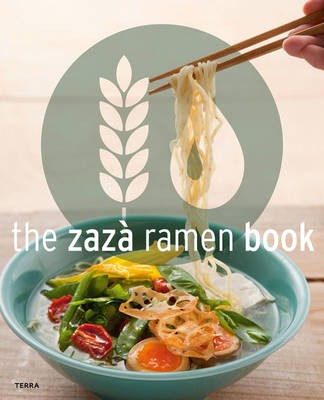
The Zaza Ramen Book: A Photographic Journey to the Far Corners of Earth by Brendan Becht

This book has not been indexed yet...

Notes about this book

This book does not currently have any notes.

You must Create an Account or Sign In to add a note to this book.

Reviews about this book

This book does not currently have any reviews.

  • ISBN 10 9089896538
  • ISBN 13 9789089896537
  • Published Jul 29 2015
  • Format Hardcover
  • Page Count 256
  • Language English
  • Countries Belgium
  • Publisher Lannoo
  • Imprint Lannoo

Publishers Text

A year of Zaza Ramen packed with photos and in 12 monthly chapters: from appetisers, to ramen to desserts, but also the Japanese fluids: a specially designed soda and sake, whisky, liquors. Clearly, "simplicity" in this case becomes an achievement: the "combination by subtraction" of two worlds. Ramen in this sense is modern Japanese cuisine in context, a dish made up of three basic elements interpreted in different ways: broth and fresh pasta with a choice of vegetables, meat, or seafood. Zaza Ramen's interpretations are, above all, delicate, and they are all prepared on site with the highest quality ingredients. The first clue is in the name: in the Italian version of the incredibly popular Manga series Lupin III, Zaza is the well-liked Inspector Zenigata, who is often seen eating Ramen. The choice of name is a metaphor, with a touch of irony, for a popular Japanese product proposed to an Italian audience. If it is true that Ramen is the most popular dish in Japan, here, in the heart of Milan, we find a high-end but still authentic version that is rigorous in its approach and clearly aware of the ingredients of Italian gastronomic culture. Another clue is the logo, which contains no trace of classic Japanese iconography but instead has a contemporary style. A bowl, a spring of wheat, and a drop of water: the raw elements of Ramen symbolise essentials, purity, and authenticity. The same guiding principles are to be found in the design of the restaurant's interior, with natural materials and small details borrowed from Japanese tradition.

Other cookbooks by this author