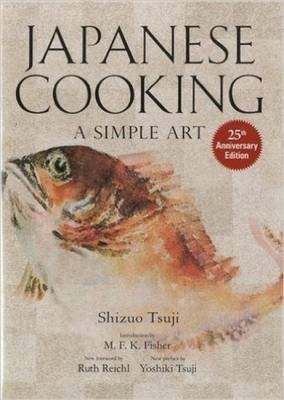
Japanese Cooking: A Simple Art by Shizuo Tsuji

    • Categories: Stocks; Japanese
    • Ingredients: konbu; bonito flakes
    show

Notes about this book

  • featherbooks on April 19, 2013

    Notable Recipes according to 101 Classic Cookbooks (2012): Basic Stock, p. 520, grilled Mushrooms with Ponzu Sauce, p. 413, Homemade Japanese Noodles, p. 452, Miso Soup, p. 340, Ponzu Sauce, p. 522, Savory Cup Custard, p. 468, Steamed Salmon, Steak Teriyaki, p. 547, Sushi Rice, Vinegared Octopus.

Notes about Recipes in this book

  • Primary dashi (Ichiban dashi)

    • LeslieB22 on September 21, 2011

      I use this recipe as a guideline each time I make dashi in terms of the timing. The tips are also really good. However, I am dubious about the quantities. 30g of katsuo-boshi/bonito seems like so much! I always use less...

    • abrownb1 on February 21, 2022

      The amounts of kombu and katsuobushi in this recipe are about 3x the amount of others so I was a bit skeptical but it made the best miso soup ever! If using for miso soup, make sure to use red (aka) miso so it isn't overpowered. Make sure to make the secondary dashi after to get the most from the pricey katsuobushi. That version tastes pretty much like what most basic dashi recipes taste like.

    • rmardel on February 26, 2026

      The first time I made this, I too doubted the amounts. However the resulting dash is not only the clearest, but the best dashi I have ever made, delicate, yet also flavorful. It makes a miso soup with a purity of flavor I had not previously encountered. Save the kombu and katsuobushi for the secondary dashi.

  • Secondary dashi (Niban dashi)

    • abrownb1 on February 21, 2022

      If using the book's ratio for primary dashi, this secondary dashi tastes pretty much like most recipe's primary dashi.

    • rmardel on February 26, 2026

      Make this with the remnants from the book's primary dashi. The results are quite good, pretty much what every other recipe for dashi I have made tastes like. These two recipes have made me rethink dashi and its use in both soups and recipes.

  • Miso soup (Miso-shiru)

    • abrownb1 on February 21, 2022

      Classic recipe for miso soup. If using a lighter dashi base, might want to opt for white miso (or blend or red and white) to keep things more balanced.

  • Tosa soy sauce (Tosa-jōyu)

    • Rinshin on March 06, 2019

      This is a perfect Tosa joyu. No surprise here since Tsuji is the authority on Japanese flavors and cooking in Japan.

  • Teriyaki sauce

    • smtucker on January 04, 2015

      Delicious. Made the Yellowtail Teriyaki but with salmon. Recipe also calls for some sugar. Easy easy easy.

  • Chicken teriyaki (Tori no teriyaki)

    • katiesue28 on June 04, 2020

      Very simple and delicious dish. Cannot wait to try with fish.

  • Chicken-'n-egg on rice (Oyako donburi)

    • mjes on August 22, 2021

      This simple donburi is one of my favorite Japanese dishes. For some unknown reason, the lightly seasoned dashi-soy sauce mix goes with the rice in a way that I crave if I go too long without it. I sometimes add mirin as suggested in other recipes.

  • Ginger pork sauté (Butaniku shōga-yaki)

    • meggan on March 10, 2021

      Very simple. I would use more ginger next time.

  • Drenched radish (Daikon fukume-ni)

    • hashi on December 29, 2025

      Made with Korean daikon from my garden. This one takes a little time with the simmering, but the results are delicious.

  • Green beans with sesame-miso dressing (Sandomame goma-miso ae)

    • willinzuri on November 19, 2017

      I could only find red miso from taiwan, but I really enjoyed this dish. Very quick to do with steamed green beans. Just cut off the tops and tails and no need to take the seam off.

  • Soused spinach (Hōrensō no ohitashi)

    • lync on August 13, 2018

      Classic Japanese taste. Russo's bunch spinach is the Japanese Spinach described here with the red stem at the base.

  • Pork cutlet on rice (Katsudon)

    • Rinshin on March 14, 2019

      I used this recipe for only the sauce as I had leftover tonkatsu from previous night. I would increase the quantity of eggs as it seemed lacking. Also the sauce taste is good although for my taste it needed a little more sweetness. Next time, I would add more mirin or some sugar. I have taken courses via Tsuji in the past and know how incredible their teachers/chefs are but if I had to judge their school or their reputation based on this one sauce, I would say it is not representative of the best katsudon sauce taste in Japan now, esp the skimpiness of eggs in this recipe. Most Japanese would expect richer egg addition. Added biased cut asparagus with onion.

You must Create an Account or Sign In to add a note to this book.

Reviews about this book

This book does not currently have any reviews.

  • ISBN 10 1568363885
  • ISBN 13 9781568363882
  • Published Feb 17 2012
  • Format Hardcover
  • Page Count 508
  • Language English
  • Edition 25th Anniversary edition
  • Countries United States
  • Publisher Kodansha International

Publishers Text

When it was first published, Japanese Cooking: A Simple Art changed the way the culinary world viewed Japanese cooking, moving it from obscure ethnic food to haute cuisine.

Twenty-five years later, much has changed. Japanese food is a favorite of diners around the world. Not only is sushi as much a part of the Western culinary scene as burgers, bagels, and burritos, but some Japanese chefs have become household names. Japanese flavors, ingredients, and textures have been fused into dishes from a wide variety of other cuisines. What hasn't changed over the years, however, are the foundations of Japanese cooking. When he originally wrote Japanese Cooking: A Simple Art, Shizuo Tsuji, a scholar who trained under famous European chefs, was so careful and precise in his descriptions of the cuisine and its vital philosophies, and so thoughtful in his choice of dishes and recipes, that his words--and the dishes they help produce--are as fresh today as when they were first written.

The 25th Anniversary edition celebrates Tsuji's classic work. Building on M.F.K.Fisher's eloquent introduction, the volume now includes a thought-provoking new Foreword by former Gourmet Editor-in-Chief Ruth Reichl and a new preface by the author's son and Tsuji Culinary Institute Director Yoshiki Tsuji. Beautifully illustrated with eight pages of new color photos and over 500 drawings, and containing 230 traditional recipes as well as detailed explanations of ingredients, kitchen utensils, techniques and cultural aspects of Japanese cuisine, this edition continues the Tsuji legacy of bringing the Japanese kitchen within the reach of Western cooks.


Other cookbooks by this author