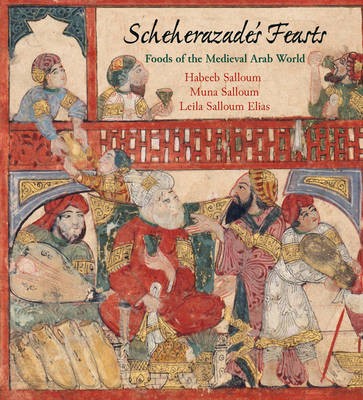
Scheherazade's Feasts: Foods of the Medieval Arab World by Habeeb Salloum and Leila Salloum Elias and Muna Salloum
This book has not been indexed yet...
Notes about this book
You must Create an Account or Sign In to add a note to this book.Reviews about this book
- ISBN 10 081224477X
- ISBN 13 9780812244779
- Published Jul 05 2013
- Format Hardcover
- Page Count 256
- Language English
- Countries United States
- Publisher University of Pennsylvania Press
- Imprint University of Pennsylvania Press
Publishers Text
The author of the thirteenth-century Arabic cookbook Kitab al- ab kh proposed that food was among the foremost pleasures in life. Scheherazade's Feasts invites adventurous cooks to test this hypothesis. From the seventh to the thirteenth centuries, the influence and power of the medieval Islamic world stretched from the Middle East to the Iberian Peninsula, and this Golden Age gave rise to great innovation in gastronomy no less than in science, philosophy, and literature. The medieval Arab culinary empire was vast and varied: with trade and conquest came luxury, abundance, new ingredients, and new ideas. The emergence of a luxurious cuisine in this period inspired an extensive body of literature: poets penned lyrics to the beauty of asparagus or the aroma of crushed almonds; nobles documented the dining customs obliged by etiquette and opulence; manuals prescribed meal plans to deepen the pleasure of eating and curtail digestive distress. Drawn from this wealth of medieval Arabic writing, Scheherazade's Feasts presents more than a hundred recipes for the beverages, foods, and sweets of a sophisticated and cosmopolitan empire. The recipes are translated from medieval sources and adapted for the modern cook, with replacements suggested for rare ingredients such as the first buds of the date tree or fat rendered from the tail of a sheep. With the guidance of prolific cookbook writer Habeeb Salloum and his daughters, historians Leila and Muna, these recipes are easy to follow and deliciously appealing. The dishes are framed with verse inspired by them, culinary tips, or tales of the caliphs and kings whose courts demanded their royal preparation. To contextualize these selections, a richly researched introduction details the foodscape of the medieval Islamic world.Other cookbooks by this author
- Arab Cooking on a Prairie Homestead: Recipes and Recollections from a Syrian Pioneer
- Arab Cooking on a Saskatchewan Homestead: Recipies and Recollections
- The Arabian Nights Cookbook: From Lamb Kebabs to Baba Ghanouj, Delicious Homestyle Arabian Cooking
- Asian Cooking Made Simple: A culinary journey along the Silk Road and beyond
- Bison Delights: Middle Eastern Cuisine, Western Style
- Classic Vegetarian Cooking from the Middle East & North Africa
- Classic Vegetarian Cooking from the Middle East & North Africa
- Classic Vegetarian Cooking from the Middle East and North Africa
- Classic Vegetarian Cooking from the Middle East and North Africa
- The Complete Middle Eastern Vegetarian: Classic Recipes from the Middle East and North Africa
- From the Lands of Figs & Olives: Over 300 Delicious & Unusual Recipes from the Middle East And North Africa, Revised and Updated
- From the Lands of Figs & Olives: Over 300 Delicious & Unusual Recipes from the Middle East and North Africa
- From the Lands of Figs and Olives: Over 300 Delicious and Unusual Recipes from the Middle East and North Africa
- From the Lands of Figs and Olives: Over 300 Delicious and Unusual Recipes from the Middle East and North Africa
- The Scent of Pomegranates and Rose Water: Reviving the Beautiful Food Traditions of Syria
- The Scent of Pomegranates and Rose Water: Reviving the Beautiful Food Traditions of Syria
- Scheherazade's Feasts: Foods of the Medieval Arab World
- Sweet Delights from a Thousand and One Nights: The Story of Traditional Arab Sweets
- Sweet Delights from a Thousand and One Nights: The Story of Traditional Arab Sweets
- Sweet Delights from a Thousand and One Nights
- Sweet Delights from a Thousand and One Nights: The Story of Traditional Arab Sweets
- The Sweets of Araby: Enchanting Recipes from the Tales of the 1001 Arabian Nights
- The Sweets of Araby: Enchanting Recipes from the Tales of the 1001 Arabian Nights
- The Sweets of Araby: Enchanting Recipes from the Tales of the 1001 Arabian Nights