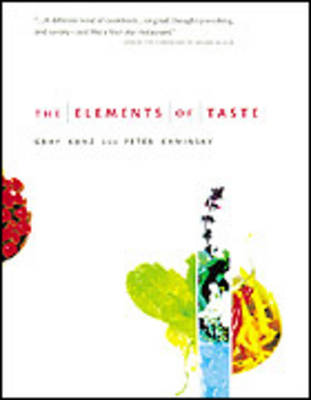
The Elements of Taste by Gray Kunz and Peter Kaminsky
Notes about this book
You must Create an Account or Sign In to add a note to this book.Reviews about this book
Reviews about Recipes in this Book
-
Rice flake crusted salmon with chile citrus sauce
-
Full review
Lisa Is Cooking
...this dish is actually very simple to prepare. In the book, it’s made with a rice flake crust. I wasn’t able to locate rice flakes, but I did find quinoa flakes and used those instead.
-
- ISBN 10 0316608742
- ISBN 13 9780316608749
- Linked ISBNs
- 9780316055499 (United States) 12/14/2008
- Published Apr 04 2002
- Format Hardcover
- Language English
- Edition illustrated edition
- Countries United States
- Publisher Little, Brown & Company
- Imprint Little, Brown & Company
Publishers Text
Four-star chef Gary Kunz has teamed up with food writer Peter Kaminsky to put together a cookbook that looks precisely at what taste is. From "aromatic" to "floral herbal" to "picante", they have identified the 14 basic tastes in the chef's palate. Each of the book's 130 recipes teaches the reader how to use these fundamental building blocks, establishing basic principles so that the reader will have not only the means for creating his or her own masterpieces, but also the language to describe what the inner dynamic of flavour is. Wine lovers have long had a vocabulary to describe the complexity of wines, but gourmands have had no such lexicon - until now!Other cookbooks by this author
- The Artisanal Kitchen: Barbecue Sides: Perfect Slaws, Salads, and Snacks for Your Next Cookout
- The Artisanal Kitchen: Barbecue Sides: Perfect Slaws, Salads, and Snacks for Your Next Cookout
- Bacon Nation: 125 Irresistible Recipes
- Bacon Nation: 125 Irresistible Recipes
- Bien Cuit: The Art of Bread
- Bien Cuit: The Art of Bread
- The Catch: Sea-To-Table Recipes, Stories and Secrets
- The Catch: Sea-To-Table Recipes, Stories & Secrets
- Chef Daniel Boulud: Cooking in New York City
- Cucina of Le Marche: A Chef's Treasury of Recipes from Italy's Last Culinary Frontier
- Culinary Intelligence: The Art of Eating Healthy (and Really Well)
- Culinary Intelligence
- Culinary Intelligence: The Art of Eating Healthy (and Really Well)
- Culinary Intelligence: The Art of Eating Healthy (and Really Well)
- The Elements of Taste
- The Essential New York Times Grilling Cookbook: More Than 100 Years of Sizzling Food Writing and Recipes
- Good Fat Cooking: 100 Recipes for a Flavor-Packed, Healthy Life
- Good Fat Cooking: Recipes for a Flavor-Packed, Healthy Life: A Cookbook
- Happy in the Kitchen: The Craft of Cooking, The Art of Eating
- How to Dress an Egg: Surprising and Simple Ways to Cook Dinner
- How to Dress an Egg: Surprising and Simple Ways to Cook Dinner
- John Madden's Ultimate Tailgating
- Maccioni Family Cookbook: Recipes and Memories from an Italian-American Kitchen
- Mallman en Llamas: 100 Recetas
- Mallmann on Fire: 100 Recipes
- Mallmann on Fire: 100 Recipes
- The Moon Pulled Up an Acre of Bass: A Flyrodder's Odyssey at Montauk Point
- The Party Begins with Bacon
- Pig Perfect: Encounters With Remarkable Swine And Some Great Ways To Cook Them
- Pig Perfect: A Pilgrim's Progress Toward the Holy Grail of Ham and Barbecue Ribs
- Seven Fires: Grilling the Argentine Way
- Seven Fires: Grilling the Argentine Way
- Sweet Magic: Easy Recipes for Delectable Desserts
- Sweet Magic: Easy Recipes for Delectable Desserts
- The Sweet Spot: Dialing Back Sugar and Amping Up Flavor for Better Desserts
- The Sweet Spot: Dialing Back Sugar and Amping Up Flavor
- The World's Most Creative Kitchen