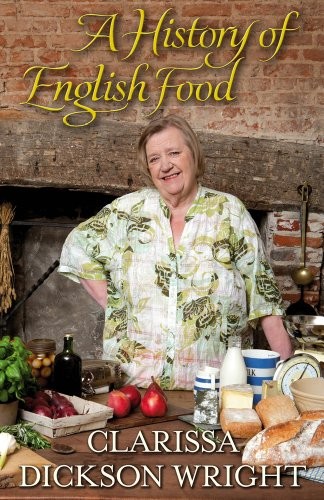
A History of English Food by Clarissa Dickson Wright
Notes about this book
You must Create an Account or Sign In to add a note to this book.Reviews about this book
- ISBN 10 1905211856
- ISBN 13 9781905211852
- Linked ISBNs
- 9781448107452 eBook (United Kingdom) 10/13/2011
- 9780099514947 Paperback (United Kingdom) 9/6/2012
- Published Oct 13 2011
- Format Hardcover
- Page Count 512
- Language English
- Edition 0
- Countries United Kingdom
- Publisher Random House UK
Publishers Text
The much-missed Clarissa Dickson Wright looks at the history of English food in this cookery book. The celebrity chef tells all about the shifting influences on the national diet whilst also acknowledging the chefs and cookery book writers who have shaped public taste. Giving vivid descriptions of English food throughout the ages, the book is full of Clarissa's larger-than-life personality and even features some of the recipes. Insightful and entertaining by turns, this is a magnificent tour of nearly a thousand years of English cuisine, peppered with surprises and seasoned with Clarissa Dickson Wright's characteristic wit.
In this major new history of English food, Clarissa Dickson Wright takes the reader on a journey from the time of the Second Crusade and the feasts of medieval kings to the cuisine—both good and bad—of the present day. She looks at the shifting influences on the national diet as new ideas and ingredients have arrived, and as immigrant communities have made their contribution to the life of the country. She evokes lost worlds of open fires and ice houses, of constant pickling and preserving, and of manchet loaves and curly-coated pigs. And she tells the stories of the chefs, cookery book writers, gourmets, and gluttons who have shaped public taste—from the salad-loving Catherine of Aragon to the foodies of today. Above all, she gives a vivid sense of what it was like to sit down to the meals of previous ages, whether an eighteenth-century laborer's breakfast, a twelve-course Victorian banquet, or a lunch out during the Second World War.
Other cookbooks by this author
- Clarissa and the Countryman: A Celebration of the Countryside
- Clarissa and the Countryman Sally Forth (Vol 2)
- Clarissa's Comfort Food
- Clarissa's Comfort Food
- Cocina de Caza
- Cooking with the Two Fat Ladies
- Cooking with the Two Fat Ladies: Gastronomic Adventures (with Motorbike and Sidecar)
- Food - What We Eat & How We Eat
- Food - What We Eat And How We Eat
- Food - What We Eat And How We Eat
- The Game Cookbook
- The Game Cookbook
- The Game Cookbook
- The Game Cookbook
- The Haggis: A Little History
- The Haggis: A Little History
- The Haggis: A Little History
- Hieland Foodie: A Scottish Culinary Voyage with Clarissa
- A History of English Food
- A History of English Food
- Potty!: Clarissa's One Pot Cookbook
- Potty!: Clarissa's One Pot Cookbook
- Potty!: Clarissa's One Pot Cookbook
- Rifling Through My Drawers: My Life in a Year
- Rifling Through My Drawers
- Rifling Through My Drawers
- Rifling Through My Drawers
- Rifling Through My Drawers
- Rifling Through My Drawers
- Rifling Through My Drawers
- Spilling the Beans
- Spilling the Beans
- Spilling the Beans
- Spilling the Beans
- Sunday Roast: The Complete Guide to Cooking and Carving
- Sunday Roast: The Complete Guide to Cooking and Carving
- Sunday Roast: The Complete Guide to Cooking and Carving
- Sunday Roast: The Complete Guide to Cooking and Carving
- The Sunday Roast Kit
- Two Fat Ladies: Gastronomic Adventures (with Motorbike and Sidecar)
- Two Fat Ladies: Gastronomic Adventures (with Motorbike and Sidecar)
- Two Fat Ladies: Gastronomic Adventures (with Motorbike and Sidecar)
- Two Fat Ladies: Gastronomic Adventures (with Motorbike and Sidecar)
- Two Fat Ladies : Gastronomic Adventures with a Motorbike and a Sidecar
- Two Fat Ladies Full Throttle
- Two Fat Ladies Full Throttle
- Two Fat Ladies Full Throttle
- Two Fat Ladies Full Throttle
- Two Fat Ladies Full Throttle
- Two Fat Ladies Full Throttle
- Two Fat Ladies Obsessions: Over 150 Recipes Featuring Their Favourite Foods and Heartfelt Passions
- Two Fat Ladies Obsessions: Over 150 Recipes Featuring Their Favourite Foods and Heartfelt Passions
- Two Fat Ladies Obsessions: Over 150 Recipes Featuring Their Favourite Foods and Heartfelt Passions
- The Two Fat Ladies Ride Again
- Two Fat Ladies Ride Again
- The Two Fat Ladies Ride Again
- Two Fat Ladies Ride Again
- Two Fat Ladies Ride Again