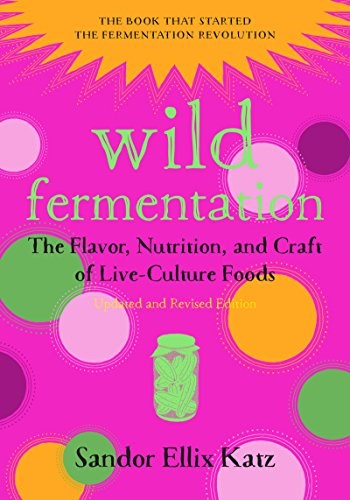
Wild Fermentation: The Flavor, Nutrition, and Craft of Live-Culture Foods, 2nd Edition by Sandor Ellix Katz

    • Categories: Fermenting; Chutneys, pickles & relishes; German; Vegetarian; Vegan
    • Ingredients: cabbage; sea salt
    show

Notes about this book

  • mjes on September 08, 2021

    Okroshka (kvass-based soup) (pg 165) - this recipe may also be made with pickle or sauerkraut brine. I made it with pickle brine. It is a vegetable soup -- potato, carrot, turnip, onion, apple, cucumber -- with mustard and herbs. I found the soup interesting but not to my taste. I would understand why others might be more enthusiastic.

Notes about Recipes in this book

  • Sauerkraut

    • RosieB on June 14, 2014

      I was lucky to find a second hand fermentation crock and I made this recipe. I left it longer due to circumstances but it was great. We are still eating it. A good bit of crunch but with a nice tang and so much nicer than the bottled sauerkraut. There was no mould. I can't wait try some other recipes.

  • Fruit kimchi

    • ywgttw on November 03, 2019

      This turned out really well. I used plums from the garden which needed using up. It was very straightforward and it has all the tang and kick of a plain kimchi but with a sweetness. The recipe says to eat it quickly to get the benefit of the fruit but to be honest ours is now weeks old and is still nice and sweet/sour, just the plums have gone very soft. Would make again.

  • Miso soup

    • Ganga108 on July 25, 2025

      Such a lovely write-up on miso soup from Katz. Today's miso soup was made this way using kombu in the broth and a sweet miso. Topped with sliced rehydrated shiitake mushrooms, fried tofu cubes and wakame. The lighter, sweeter miso was such a contrast to the dark and red miso I have been having lately with their rich umami funkiness. The sweet miso is such a contrast.

  • Miso-tahini spread

    • Ganga108 on January 05, 2026

      Such an excellent use of miso --- and of tahini. We've made similar for many years. We use it as a dip, spread, sauce, dressing - just thinning it as needed. At times I make it "plain" without the lemon and garlic. After reading Ottolenghi's newsletter on vegan flavour boosters I am wondering if adding a little nutritional yeast would also be good.

    • Ganga108 on January 05, 2026

      Katz has a section in Art of Fermentation called "Miso dressings, sauces and spreads" on P324 that contains this recipe as well. He suggests thinning the spread with citrus juice, kraut or kimchi juice, or vegetable cooking water as an alternative to water. (Also mentions miso-yoghurt and miso-peanut-butter mixes, yum.)

  • Sweet and spicy glazed tempeh with broccoli and daikon [Orchard]

    • clcorbi on January 05, 2018

      Yum. SO tasty--the sauce is perfectly spicy and ends up having a nice teriyaki flavor. I made a couple of changes--I used seitan crumbles rather than tempeh, and didn't feel that they needed to be steamed so I skipped that step. I also substituted sliced carrot for the daikon, and omitted both the arrowroot powder and wine from the sauce. Those omissions didn't have any negative effect--everything was delicious. This is also a super fast dinner and I'd definitely make it again.

  • Coconut chutney [Inspired by Shanta Nimbark Sacharoff's recipe in "Flavours of India: Vegetarian Indian Cooking"]

    • debnharold on September 16, 2012

      great with sticky rice - freezes very well so you might want to double.

  • Kvass

    • Ganga108 on April 07, 2025

      P78 in the second edition. I have made batches of this, one after another, since I first made it in January. It is wonderful - earthy, briney, and tangy with a little fizz. I make it in either a 1-litre or 3-litre vessel, depending on how many beets I have.

  • Infused vinegars

    • Ganga108 on April 06, 2026

      I am making pomegranate vinegar from some of the arils from the first ever pomegranate picked from the tree (after 3 years of waiting). The vinegar is gorgeously pink. I used a pestle to lightly crack the arils in the jar.

  • [Using] Brined garlic

  • Beet kvass

    • Ganga108 on July 01, 2025

      Katz has beet kvass in Art of Fermentation and this book. It is one of my favourite ferments. This week I am trying one of his suggestions - turnip, ginger and beetroot. I've included the beetroot stems, and added fenugreek seeds to help the fermentation, plus cumin and fennel seeds for taste. Beet kvass is always delicious! (The leftover beetroot is either used in smoothies or I roast it as a side vegetable - it could also be used in a beetroot soup.)

  • Cultured cabbage "juice"

    • Ganga108 on July 18, 2025

      This recipe is also in The Art of Fermentation. It is a lovely green colour, quite a contrast the beet kvass that I usually make.

  • Kaanji

    • Ganga108 on April 10, 2025

      Kaanji. Recipe in the text. This is delightful, with the flavours of the spices and veg coming through beautifully. Katz has wild amounts of mustard seed and salt in this book, and wilder in Art of Fermentation. My go-to Indian book has ratios of 450g carrots: 2 Tbsp black mustard seeds: 1 Tbspn salt : 3L water. Carrots are cut into slices lengthwise. Add 1 tspn chilli powder if you dare. I have yet to make it this way, but used a recipe similar to Katz' but with less salt and less mustard seeds, and loved it. (This recipe from a site I trust uses more mustard seeds but still not at Katz' level: https://www.vegrecipesofindia.com/carrot-kanji-gajar-kanji-recipe/ Another thing to note about Indian recipes for Kaanji is that they ferment it in the sun for a few days.)

    • Ganga108 on July 18, 2025

      This is the second time making kaanji (carrots, beetroot, cracked mustard seeds). It is in Art of Fermentation too. Next time I will source original Indian recipes, because the make it by sunning the jars in windows or on rooftops (see previous comment), which goes against all advice from Western fermentistas. I've made a quasi Indian recipe before, with additional spices and a more balanced salt/mustard/veg/water ratio. Next is to try with the addition of some warmth of the sun.

  • Fruit scrap vinegar

    • Ganga108 on May 24, 2025

      My first attempt at quince vinegar failed. I didn't really follow a recipe and was a bit absent-minded about the process - a lot going on at the time. It tasted so good in the early stages tho. So I have gone back to Katz and his ratios etc, and a more mindful process. Fingers crossed for this batch. [He also has a very small section on Fruit Vinegars in Art of Fermentation P176-7 that includes sugar:water ratios but also references this recipe.] It turned out to be my most favourite vinegar.

    • Ganga108 on April 08, 2026

      I am using this again to make more quince vinegar and also apple vinegar. An Australian wet Autumn day is a great time to be making vinegar with autumnal fruits.

You must Create an Account or Sign In to add a note to this book.

Reviews about this book

This book does not currently have any reviews.

  • ISBN 10 1603586296
  • ISBN 13 9781603586290
  • Published Aug 26 2016
  • Format eBook
  • Page Count 346
  • Language English
  • Edition 2
  • Countries United States
  • Publisher Chelsea Green Publishing

Publishers Text

“Wild Fermentation [has] become a manifesto and how-to manual for a generation of underground food activists.”—The New Yorker

The book that started the fermentation revolution, with recipes including kimchi, miso, sauerkraut, pickles, gundruk, kombucha, kvass, sourdough, paneer, yogurt, amazaké, and so much more!

Sandor Ellix Katz, winner of a James Beard Award and New York Times bestselling author, whom Michael Pollan calls the “Johnny Appleseed of Fermentation” returns to his iconic, bestselling book with a fresh perspective, renewed enthusiasm, and expanded wisdom from his travels around the world. This self-described fermentation revivalist is perhaps best known simply as Sandorkraut, which describes his joyful and demystifying approach to making and eating fermented foods, the health benefits of which have helped launch a nutrition-based food revolution.

Since its original publication, and aided by Katz’s engaging and fervent workshop presentations, Wild Fermentation has inspired people to turn their kitchens into food labs: fermenting vegetables into sauerkraut, milk into cheese or yogurt, grains into sourdough bread, and much more. In turn, they’ve traded batches, shared recipes, and joined thousands of others on a journey of creating healthy food for themselves, their families, and their communities. Katz’s work earned him the Craig Clairborne lifetime achievement award from the Southern Foodways Alliance, and he has been called “one of the unlikely rock stars of the American food scene” by The New York Times.

This updated and revised edition, now with full color photos throughout, is sure to introduce a whole new generation to the flavors and health benefits of fermented foods. It features many brand-new recipes, including:

  • Strawberry Kvass
  • African Sorghum Beer
  • Infinite Buckwheat Bread
  • And many more!

Updates on original recipes also reflect the author’s ever-deepening knowledge of global food traditions. For Katz, his gateway to fermentation was sauerkraut. So open this book to find yours, and start a little food revolution right in your own kitchen!

“A solid reference library will take you a long way in the fermentation game. By law (or just about), the first book in it should be the recently revised edition of Wild Fermentation by Sandor Katz. It provides know-how, recipes, [and] you-can-do-it spunk.”—Wired Magazine

More praise for Sandor Ellix Katz and his books:

“The Art of Fermentation is an extraordinary book, and an impressive work of passion and scholarship.”—Deborah Madison, author of Local Flavors

“The fermenting bible.”—Newsweek

“In a country almost clinically obsessed with sterilization Katz reminds us of the forgotten benefits of living in harmony with our microbial relatives.”—Grist

Other cookbooks by this author