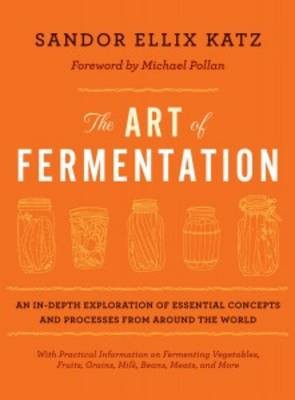
The Art of Fermentation: An In-Depth Exploration of Essential Concepts and Processes from Around the World by Sandor Ellix Katz

    • Categories: Cocktails / drinks (with alcohol); Fermenting
    • Ingredients: honey
    show

Notes about this book

  • Ganga108 on October 29, 2025

    I've made the carrots and radishes mentioned on P125 in Experimental Spirit, also with added turnip and beetroot. Very nice.

Notes about Recipes in this book

  • Seasons of refreshing - fermented herb mix [Monique Trahan]

    • Ganga108 on January 10, 2025

      It seems natural that this is my first fermented recipe and the first one from this book, as the garden is full of herbs. Easy beginner recipe. I'll update with the result in 3 or so days. UPDATE: Tasted on 4th day, and think this could do with more fermentation, although I will leave only one more day. It is fresh, green and herby, and delicious although i'd like to mellow out the flavours a little. This is probably due to the herb mix I used but also because I think the author of this recipe likes it really herby and green. I used the ziplock bag method initially, and found that the juices overflowed. I have put a lid on for the final day and will burp a couple of times. It is all a learning process.

  • Sweet miso porridge [Christina Elwell, South River Miso Company]

    • Ganga108 on January 05, 2026

      Kirsten Shockey has included this recipe, originally from South River Miso, in her 30-day Fermentation Challenge and also in her Miso book. Katz acknowledges the source too. It is extremely interesting how the miso causes the oats to ferment overnight and sweetens the oats. This will become a regular, I think. You can also find the recipe on the South River Miso website, with a variation that blends it for a creamy oat milk drink.

  • Brined okra [Lorna Moravev]

    • Ganga108 on April 02, 2025

      A minimal recipe, so I am using 3% brine by weight of water only (approx 8g per cup, but please do your own checking), adding garlic and chillies as described, also long pepper. And will ferment for up to a week. Recipe specifies "a few days", and I'll go with that, depending on when the fermentation starts and how warm the weather is (or isn't). {I read of someone who fermented okra for 4 months and loved it! I am not that game.} UPDATE: It is Day 10. I have been trying the okra each day for the last 4 days, including today. Today the garlic was stronger and the okra "ferment"ier so I have stored them in the fridge. I think the peak was yesterday, when they were were bright and fresh and the garlic was less prominent. Yet, these will still be enjoyed, just different flavours, just like as cheese matures or wine too, the flavours change. Aged okra :) I like it.

  • Beet kvass (Beet rassol)

    • Ganga108 on February 09, 2025

      Katz's recipe and Shockey's in Fermented Vegetables differ a lot in how many beets, salt levels and fermentation times. I've split the difference for this first ferment (but suspect I'll go Katz's more light touch approach in future). Added fresh turmeric, fresh ginger and some long peppers to the ferment. UPDATE: I am so please with how the kvass turned out. It is slightly effervescent, salty, sour, beet-sweet and beet-earthy. Yum. I have put the beets on to ferment again for a second kvass. UPDATE AGAIN: I took the plunge and made 2L of kvass in a 3L container. I've been using Katz recipe with the amount of salt that Shockey uses. However have read that beet kvass only needs minimal sugar so will reduce more in line with Katz' approach.

  • Cultured cabbage juice

    • Ganga108 on July 18, 2025

      This recipe is also in Katz's Wild Fermentation. A gorgeous coloured tonic.

  • Punjabi carrot ferment (Kaanji)

    • Ganga108 on March 11, 2025

      I am confused by this recipe. Katz is using 1/2 cup mustard seeds and 57g salt for 2L water plus veg. This version must be a salty and intensely mustardy drink. His beetroot kvass (a similar drink, without carrots or spices) uses a small amount of salt; the 3 other Indian recipes for Kanji/Kaangi that I checked also use less salt (between <1 teaspoon to 1 tablespoon of Indian black salt). Likewise, mustard seeds range from 2 teaspoons to 3 tablespoons, less than half of his amount (and he uses ground!! mustard seeds). I've made one of those other recipes with a mix of beetroot and carrots with 2tspn crushed mustard seeds + 1 Tblspn salt (I mixed sea salt and kala namak). What I loved about the recipe that I made is that you can taste the carrots and beets individually, as well as the spiciness (hing and mustard). Chilli powder is an option that I haven't tried yet. Ferments for 3-4 days. SO I am quite nervous about trying Katz' version - perhaps it is only for the brave.

    • Ganga108 on July 18, 2025

      This is the second time making kaanji (carrots, beetroot, cracked mustard seeds but reduced proportions to his recipe). The recipe is also in Wild Fermentation with slightly different proportions.

  • Soaking grains

    • Ganga108 on February 07, 2025

      When I can, I do this with the larger/harder lentils too, for around 24 hours.

  • Congee

    • Ganga108 on July 25, 2025

      I've cooked congee any which way over the years, including with millet and other grains. I have even cooked it overnight as he suggests, but in the lowest of low ovens. I have made it in a thermos as he mentions, which makes a great breakfast or lunch. I have made left-over-rice congee, Instant Pot congee, and slow, long cooked congee in Chinese clay pots. It is amazing that half a cup of rice can make 3 or 4 servings, depending on what you put with it and how you cook it. Long and slow in a clay pot is my most favourite (and healthiest according to Katz), altho the other, quicker types are also very very good.

  • Miso soup

    • Ganga108 on July 25, 2025

      I've been taste testing a variety of locally made miso this week, from white to dark, and in between, using a simple miso soup as the base for taste testing, very similar to this. Delicious, every one, with such different flavours.

You must Create an Account or Sign In to add a note to this book.

Reviews about this book

  • Food in Jars

    If you only have space for one book on the topic of fermentation, this is the one to have...It can be dense at times, but as long as you approach it with patience, it will never let you down.

    Full review
  • Food52 by Andrea Gentl

    The 2014 Piglet Tournament of Cookbooks vs. Notes From the Larder by Nigel Slater

    Full review
  • ISBN 10 160358286X
  • ISBN 13 9781603582865
  • Linked ISBNs
  • Published May 14 2012
  • Format Hardcover
  • Page Count 432
  • Language English
  • Countries United States
  • Publisher Chelsea Green Publishing

Publishers Text

James Beard award winner - reference and scholarship.

The Art of Fermentation is the most comprehensive guide to do-it-yourself home fermentation ever published. Sandor Katz presents the concepts and processes behind fermentation in ways that are simple enough to guide a reader through their first experience making sauerkraut or yogurt, and in-depth enough to provide greater understanding and insight for experienced practitioners. While Katz expertly contextualizes fermentation in terms of biological and cultural evolution, health and nutrition, and even economics, this is primarily a compendium of practical information-how the processes work; parameters for safety; techniques for effective preservation; troubleshooting; and more. With illustrations and extended resources, this book provides essential wisdom for cooks, homesteaders, farmers, gleaners, foragers, and food lovers of any kind who want to develop a deeper understanding and appreciation for arguably the oldest form of food preservation, and part of the roots of culture itself. Readers will find detailed information on fermenting vegetables; sugars into alcohol (meads, wines, and ciders); sour tonic beverages; milk; grains and starchy tubers; beers (and other grain-based alcoholic beverages); beans; seeds; nuts; fish; meat; and eggs, as well as growing mold cultures, using fermentation in agriculture, art, and energy production, and considerations for commercial enterprises. Sandor Katz has introduced what will undoubtedly remain a classic in food literature, and is the first-and only-of its kind.

Other cookbooks by this author